Biosimulation in Africa
As biosimulation literacy and training advance in Africa, Certara is aiming to showcase feasibility, address local challenges, and bolster global capacity.
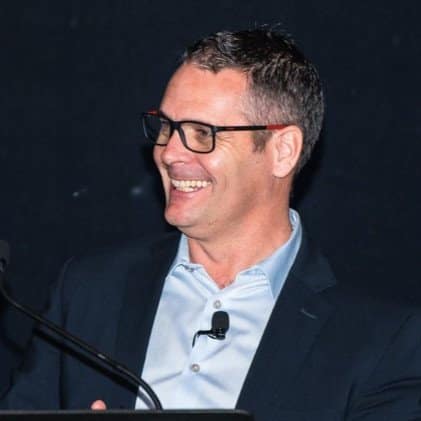
Craig Rayner
Fmr. President of Certara
BIOSIMULATION
Biosimulation involves using computer-based mathematical models and frameworks to simulate biological processes and systems. This is similar to how engineers use mathematical models to simulate scenarios like turbulence when designing airplanes. By doing so, they can gain insight into how the plane will perform in different conditions without the need for risky and expensive trial-and-error methods that could endanger lives. Biosimulation can be complex, often more so than airplane simulation, due to the intricacies of biology and diseases.
CERTARA
Certara has spent the past two decades creating complicated mathematical models to represent various biological processes that affect how drugs are distributed in the body (pharmacokinetics) and what they do to the body (pharmacodynamics).
When determining the pharmacokinetics of drugs, Certara considers many factors, including body weight, gender, genetics, organ function (such as the liver and kidneys), and where the drug is located in the body at different times.
Pharmacodynamics investigates the effects of the drug on the body or its intended target, which can be either beneficial (e.g., killing viruses or cancer cells, lowering blood pressure) or harmful (e.g., side effects, drug-drug interactions).
Certara creates mathematical models for these different drug-disease scenarios and simulates them in drug development. Medicine developers use their expertise to make crucial decisions, such as optimizing dose regimens and determining the size and scope of clinical trials.
Biosimulation models have proven to be very beneficial in situations where they are widely accepted and supported. They can potentially completely replace certain clinical trials, such as drug-to-drug interaction studies. This is especially useful in patient subpopulations, such as infants or pregnant women, where it may be difficult or unethical to conduct clinical trials. Additionally, biosimulation is well-suited for use in areas where data gathering can be challenging, such as in parts of Africa where access to clinical trials infrastructure and capability is limited. In complex diseases like tuberculosis and malaria, biosimulation can help speed up medicine delivery to patients in these difficult situations.
AFRICA
Certara has a positive outlook on Africa and sees the constraints in conducting clinical trials as opportunities for biosimulation to accelerate the development of medicines. The company acknowledges groups like Pharmacometrics Africa, which have improved the literacy and training of biosimulation on the continent. Certara aims to build upon this by partnering with pharmaceutical, philanthropic, and biotechnology clients to provide biosimulation experts in Africa with in-depth drug development experiences. Certara plans to establish a professional development finishing school in biosimulation to make the skills of African scientists relevant for medical development in Africa and globally. With Pharmacometrics Africa, Certara is committed to identifying capable scientists in Africa and providing them with the necessary resources, including access to a computer, computing power, internet connectivity, and Zoom, to take their skills to the next level. The COVID-19 pandemic has shown that we can work from anywhere and do it well.
STRATEGY
The short-term plan is to establish a footprint.
In phase one of this plan, it is necessary to demonstrate a viable team on the continent that can be onboarded, trained, and its skills honed to practice model-informed drug development at a global level. Establishing this competency is the first step to achieving a “going concern,” where we can provide high-quality and globally relevant biosimulation modelling for drug development activities that can be plugged into Certara’s 1000-people strong network.
After succeeding in phase one by proving this principle and establishing a hub where the kernel of competency can sprout, Certara can look to phase two to expand that success across the continent and attract others who sit on medicine development teams like clinical pharmacologists, toxicologists, and others. We believe that medicine development and biosimulation is a team sport. Once a going concern around this drug development method is established in Africa, other competencies will start naturally aggregating.
Once these competencies are acquired, and global best practice programs are implemented, shifting focus to addressing local issues in the intermediate term is beneficial. Local teams better understand the local context, making them more effective at solving local problems. By deploying locally acquired best practices and capabilities, we can tackle some of the challenging diseases in Africa more effectively.
In the long run, the highly skilled individuals who have worked with Certara and other clients both locally and globally to develop drugs for diseases within and beyond the continent will be able to contribute to work, employment, careers, and regulatory efforts.
Certara believes that providing high-quality online training can improve the biosimulation ecosystem in Africa and enhance capacity development on the continent. This creates a positive cycle that can lead to greater ambitions in the long run. Developing talent is the crucial first step towards achieving this goal.
CHALLENGE
Across the industry, there is a genuine desire and a hunger for biosimulation or model-informed drug development practitioners. Finding and sustaining this talent pool is challenging since it is a competitive market. Certara has dedicated professional development programs that invest a lot in talent development to help them mature and grow. While these developmental programs are internally focused, they can also make them externally focused and train the next generation of scientists. Certara is directing this energy around the world, and it makes perfect sense to be heading that energy toward Africa as well, especially given the existing groundswell of foundational scientific activities there vis-à-vis developing the right talent in biosimulation. It's a no-brainer.
BARRIERS
Pre-existing perceptions may be a barrier that Certara has to address as it proceeds with investing in a biosimulation hub in Africa. While the infrastructure is suitable for what they are trying to do with biosimulation on the continent, people might have a preconceived view that to be globally competitive, and such advanced approaches must happen in Europe or the USA. Some even think Africa is one country! Certara believes that not everything has to happen in the US or EU, nor should it. World-class biosimulation and drug development can be done from anywhere, with bright people in Africa and worldwide.
SCALABILITY
Certara has successfully scaled teams of scientists in this way very effectively. For example, it has scaled significant teams in Canada, the US, Europe, Australia, etc. They have a robust playbook on how to go about scaling. As long as Certara can access that first cohort of talent and establish early critical mass, this will continue to feed itself and scale organically. The first building blocks are essential. Put the foot down and build strong foundations, scale the initial talent, plugin globally, and then it will grow as a self-fulfilling concern.
Over time, this soft infrastructure may be attractive for ‘sea turtles’ or Africans living and working abroad who want to return home while continuing to work on globally relevant and competitive programs.
Certara sees the proof of concept as essential. They need to train and engage the first cohort and get industry partners to help maintain a flow of work so they can exercise their talent and grow professionally. Having a team at steady-state and functioning well over the next couple of years would be a first success.
COLLABORATION
We certainly encourage and embrace more collaboration in this space. Clients who have medicines to develop could engage with Certara and have some of these team members involved. This will help the teams further grow their capabilities and competencies. The clients get the quality of service they are accustomed to while also helping with training. That would be a win-win.
Certara will be investing significantly in the training and supervision of these teams, so if there is interest from others who want to contribute, it would be welcomed by Certara. The training program would be didactic projects and skills development on real-life medicine development programs, where people nurture the talent by providing close supervision, support, and industrial placements. Groups who may be interested in helping in this way could have cohorts rotate through their organization, such as getting them engaged in an Alzheimer’s project driven by a European company.
Overall, Certara is hopeful that it will find ways to collaborate with like-minded organizations oriented to this long-term vision and have a vested interest in the program's success. It does not necessarily have to be a pharmaceutical partner, and the contributions could be in cash or kind and would help provide a better learning experience and offset costs.